

A Brighter Approach to Care.
For us, care is more than the service someone receives. It is showing up with patience and heart, day after day: learning someone’s routine, noticing when a day is harder than usual, and becoming someone they are glad to see.
Our ServicesWhere Support Feels Connected.
Support rarely involves just one person — the individual, the family, the Case Manager, often a caregiver or doctor too. Repeating the same story to each of them is exhausting. So we hold the thread: we keep the notes and carry the context, before anyone has to ask.
The Care Behind the Care.
Strong support does not happen by accident. Behind every coordinator there is a structure holding things up: a Quality Assurance Specialist who trains our staff and checks the work, Service Coordinators who know their caseloads closely, and a Director who is reachable when something needs deciding.
Principles We Live By.
Consistency
The same faces, the same schedule, the same answers. When support is predictable, everything else gets easier.
Compassion
We listen before we plan. Every person we work with has preferences, opinions, and a say in their own life.
Commitment
Needs change and routines change. We adjust with them rather than waiting to be asked.
The Right Support Starts With the Right Match.
A coordinator is in someone’s home, in their kitchen, in their week. That is not a role you fill from a schedule. So before we assign anyone, we spend time with both sides. We look at what kind of support is needed day to day, how someone likes to communicate, and whether two people are simply going to get along. When the match is right, everything after it comes more easily. When it is not, we change it.

Needs
How much help is needed, how often, and which parts of the day it matters most.

Personality
How someone likes to communicate, what puts them at ease, and what does not.

Fit
Whether these two people will actually get on, which is the part that is hardest to put on paper.
A Bright Journey.
Deciding to ask for help is the hard part. What comes after it should not be. Here is the whole thing, from the first phone call to the check-ins that carry on long after care begins.

Getting to Know You
A conversation, usually at home. We ask about the day, the people in it, and what is working and what is not.

Assessment & Planning
We agree on the right level of support together, and coordinate the plan with your Regional Center.

Transition & Start
We introduce the Coordinator, walk through the first week, and stay close while everyone settles in.

Ongoing Check-Ins
We stay close as life changes. Routines shift, goals move, and support moves with them, for as long as it is needed.
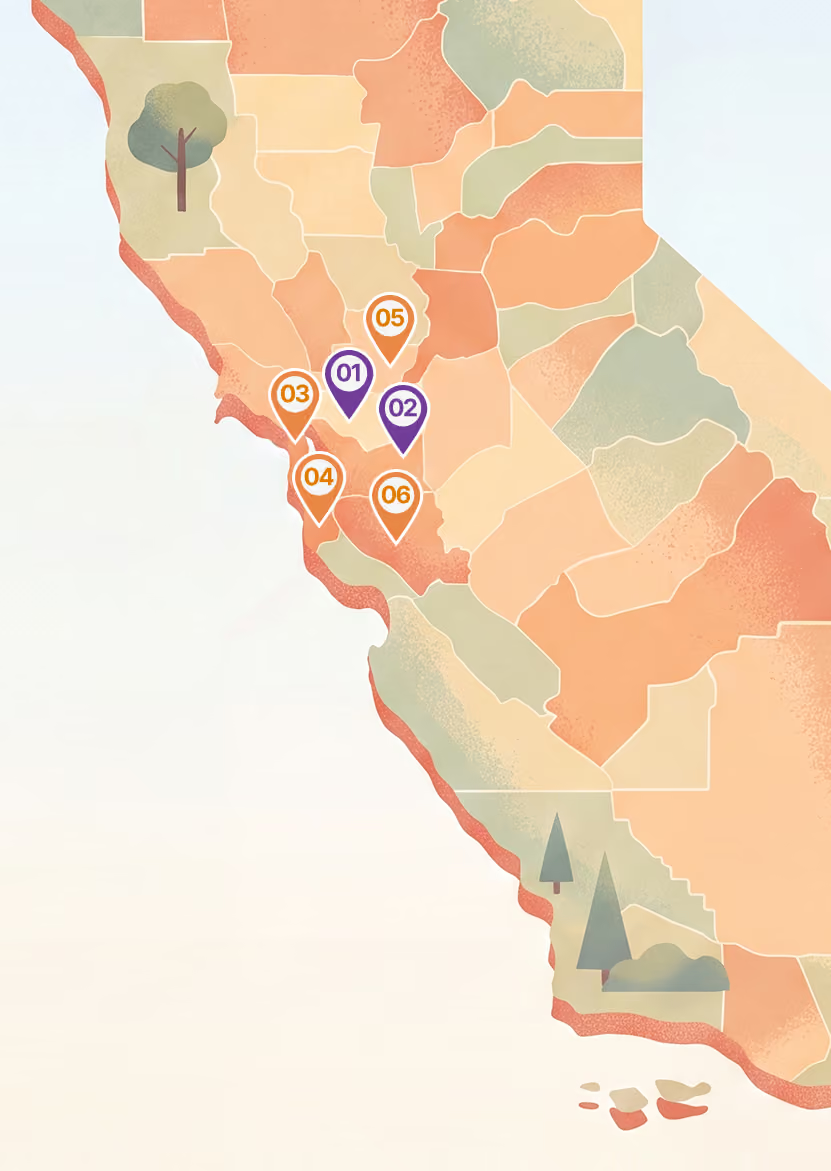
Rooted in the East Bay, Growing Across the Bay Area.
We serve Contra Costa and Alameda counties today, through the Regional Center of the East Bay (RCEB). Several more counties are in progress. If you do not see yours listed, call us anyway and we will tell you honestly whether we can help yet.